
What if your own body suddenly felt like the enemy?
To protect confidentiality, this example combines experiences from multiple clients.
Sarah had spent more than fifteen years building a successful career. She was respected by her colleagues, confident in her expertise, and had delivered countless presentations without hesitation.
Then, one ordinary morning, just minutes before an important presentation to senior leadership, everything changed.
As she stood waiting to begin, her heart suddenly started racing. Her chest tightened. She struggled to catch her breath. Her hands trembled so intensely she could barely hold her notes. A wave of dizziness washed over her, and one terrifying thought flooded her mind:
“I’m having a heart attack.”
She was certain she was about to collapse in front of everyone.
The presentation never happened.
Later that day, a thorough medical examination found nothing physically wrong. The doctor explained that she had experienced a panic attack.
Instead of feeling relieved, Sarah became even more frightened.
“Why did this happen? What if it happens again?”
Over the following weeks, she found herself dreading every meeting. Before presentations, she constantly monitored her heartbeat, worried about every sensation in her body, and rehearsed escape plans “just in case.” Eventually, she began declining opportunities that once excited her.
It wasn’t the panic attack that changed her life.
It was the fear of having another one.
Panic attacks can be overwhelming and frightening, but they are also one of the most treatable anxiety conditions. If anxiety has been affecting your daily life beyond panic attacks, you may also find our Anxiety Therapy page helpful.
Understanding Panic Attacks
A panic attack is a sudden surge of intense fear or overwhelming discomfort that reaches its peak within minutes. During that time, your body reacts as though you are facing immediate danger—even when no real threat exists.
Panic attacks are not a sign of weakness, “going crazy,” or losing control. They are the result of your brain’s survival system becoming overly sensitive and mistakenly activating the body’s emergency response.
Many people experience one or two panic attacks during particularly stressful periods of life. Others develop repeated attacks and begin living with persistent anxiety about when the next one might occur. When this pattern continues, it may develop into panic disorder.
According to the National Institute of Mental Health (NIMH), panic disorder affects millions of adults, with women diagnosed approximately twice as often as men. The encouraging news is that research consistently shows panic disorder responds well to evidence-based psychotherapy, allowing many people to regain their confidence and return to the activities they once avoided.
Perhaps the most important thing to remember is this:
A panic attack feels dangerous.
It is not actually dangerous.
Although panic attacks are intensely uncomfortable, they are temporary and do not cause heart attacks, suffocation, or loss of sanity. Understanding this difference often marks the beginning of recovery.
Recognizing the Symptoms
Panic attacks affect far more than emotions. They involve the entire body because the brain activates the same biological survival system it would use during a genuine emergency.
You may recognize yourself here.
Physical Symptoms
A panic attack may include:
- A racing or pounding heart
- Chest pain or tightness
- Shortness of breath
- Dizziness or lightheadedness
- Sweating
- Trembling or shaking
- Nausea or stomach discomfort
- Tingling or numbness
- Chills or sudden waves of heat
- Feeling faint or unsteady
These symptoms are so intense that many people believe they are experiencing a heart attack, stroke, or another serious medical emergency during their first panic attack. Seeking medical evaluation is appropriate if symptoms are new or unexplained. Once serious medical conditions have been ruled out, understanding the role of panic becomes an important next step.
Emotional Symptoms
Emotionally, panic often feels overwhelming.
People frequently describe:
- Intense fear
- A sense of impending doom
- Feeling trapped
- A desperate urge to escape
- Feeling disconnected from themselves or their surroundings
Cognitive Symptoms
Panic also changes the way we think.
Common thoughts include:
“I’m dying.”
“I’m going to faint.”
“I’m losing control.”
“I’m going crazy.”
“Everyone will notice.”
These thoughts are not a reflection of weakness or irrationality. They are the brain’s attempt to explain powerful physical sensations that seem frightening and unfamiliar.
Behavioural Changes
Often, the most significant impact of panic attacks appears after the attack itself.
Many people begin avoiding situations where another panic attack might occur, such as:
- Driving
- Public speaking
- Shopping centres
- Public transportation
- Restaurants
- Air travel
- Exercise
- Being alone
Initially, avoidance brings relief.
Over time, however, it teaches the brain that these situations truly are dangerous, making panic more likely in the future.
Why Do Panic Attacks Happen?
Imagine your brain has an internal smoke detector.
Its job is to detect danger quickly and prepare your body to survive.
Normally, this alarm activates only when you face a genuine threat.
With panic attacks, however, the alarm becomes overly sensitive. Instead of responding only to real danger, it begins reacting to harmless situations or ordinary bodily sensations.
Perhaps your heart beats faster after climbing a flight of stairs.
Perhaps you’ve had an extra cup of coffee.
Perhaps you’re tired before an important meeting.
Most people barely notice these normal physical changes.
Someone vulnerable to panic may interpret them very differently.
“Something is wrong with my heart.”
“I’m about to faint.”
“It’s happening again.”
These frightening thoughts trigger the brain’s emergency response.
Within seconds, stress hormones such as adrenaline are released. Your heart beats faster to pump more blood to your muscles. Your breathing becomes quicker to deliver more oxygen. Your muscles tense in preparation for action. Your senses become sharper as your body prepares to fight or flee.
If you’re interested in understanding why anxiety creates such intense physical sensations, you may also enjoy our article Why Anxiety Lives in the Body, which explains the connection between the brain, nervous system, and physical symptoms of anxiety.
All of these reactions are normal survival responses.
The problem is that they occur when no real danger exists.
Ironically, the stronger these physical sensations become, the more convinced the brain becomes that something terrible must be happening.
This creates a powerful feedback loop.
The brain misinterprets harmless sensations as dangerous.
The body responds with more adrenaline.
The physical symptoms intensify.
The brain becomes even more alarmed.
Within minutes, a full panic attack develops.
Although panic often feels as though it comes “out of nowhere,” it usually follows this rapid chain reaction between physical sensations, thoughts, emotions, and behaviour.
The encouraging news is that once you understand this cycle, it becomes possible to interrupt it.
Recovery does not mean eliminating anxiety altogether. It means teaching your brain that these sensations are uncomfortable—but not dangerous.
The Panic Cycle: When Fear Becomes the Problem
For many people, a single panic attack is not what changes their life.
The fear of having another one is.
This fear often leads people to become highly aware of their bodies. They begin checking their heartbeat, monitoring their breathing, or scanning for the slightest sign that panic might be returning.
The brain becomes hypervigilant.
The more closely you monitor your body, the more physical sensations you notice.
The more sensations you notice, the more likely you are to interpret them as signs of danger.
This increases anxiety, which produces even more physical symptoms.
The cycle repeats.
Sarah experienced exactly this pattern.
After her first panic attack, she no longer worried only about giving presentations. She worried about her own body. Before every meeting, she checked whether her heart was beating too fast. She questioned every flutter in her chest and every slight feeling of dizziness.
To protect herself, she started declining presentations and avoiding situations where she feared she might panic again.
Although these strategies reduced her anxiety in the moment, they unintentionally reinforced the belief that presentations were dangerous and that she could not cope without avoiding them.
Gradually, her world became smaller.
This illustrates one of the most important truths about panic disorder:
It isn’t panic itself that keeps people trapped.
It’s the fear of panic.
This fear of future anxiety is often called anticipatory anxiety. You can learn more about this pattern in our article How to Stop Anticipatory Anxiety.
Fortunately, this cycle can be broken. With the right understanding and evidence-based treatment, the brain can learn that panic sensations are false alarms—not signs of real danger. Confidence gradually returns, avoidance decreases, and life begins to expand again.
Sarah’s Turning Point
When Sarah came to therapy, she wasn’t looking to understand panic attacks.
She wanted them gone.
“I’ve given presentations for years,” she said. “Now I’m terrified that my own body will betray me.”
Like many people, Sarah believed the panic attack had happened because something was wrong with her heart or her ability to cope with stress. She had started avoiding presentations whenever possible and constantly checked her pulse before meetings. Every flutter in her chest felt like the beginning of another attack.
The first step in therapy was not teaching relaxation techniques.
It was helping Sarah understand what was actually happening.
She learned that her racing heart, shortness of breath, dizziness, and trembling were not signs of danger. They were the normal effects of adrenaline—the body’s survival system preparing her to respond to what her brain mistakenly believed was a life-threatening situation.
This understanding alone changed something important.
Instead of thinking,
“I’m having another heart attack,”
she gradually learned to say,
“This is my body’s alarm system. It’s uncomfortable, but it isn’t dangerous.”
The goal wasn’t to convince herself she felt calm.
The goal was to stop misinterpreting anxiety as catastrophe.
As therapy progressed, Sarah also discovered that her attempts to prevent panic were actually keeping it alive.
She arrived early to every meeting to make sure she could sit near the exit. She always carried a bottle of water because she believed it helped prevent panic. She repeatedly checked her smartwatch to monitor her heart rate. Before every presentation, she mentally rehearsed what she would say if she needed to leave the room.
These behaviours made her feel safer in the moment.
But they also taught her brain that presentations really were dangerous.
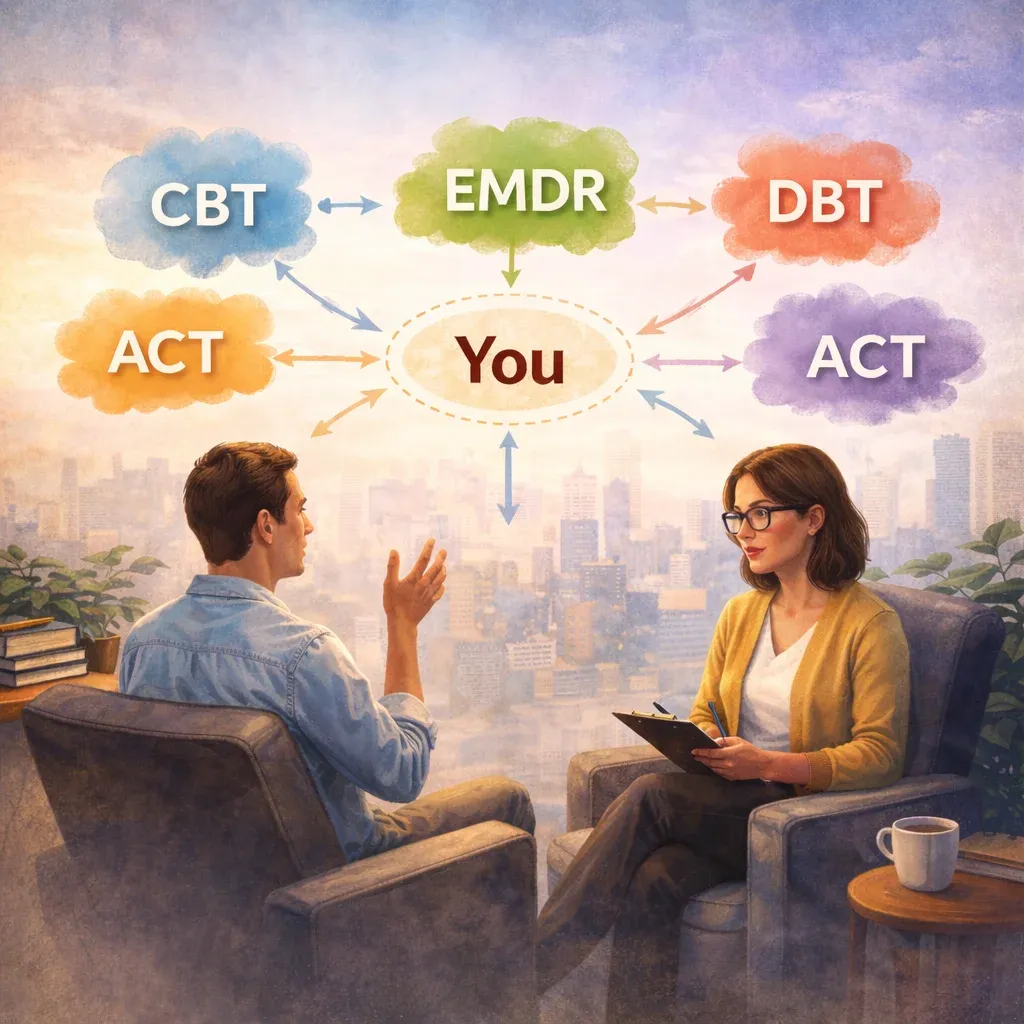
Together, we gradually reduced these “safety behaviours,” one step at a time. This approach is one of the core principles of Cognitive Behavioural Therapy (CBT), one of the most effective evidence-based treatments for panic attacks.
At first, Sarah stopped checking her pulse every few minutes.
Later, she agreed to give a short presentation without sitting near the door.
Eventually, she left her smartwatch in her bag instead of watching her heart rate throughout the meeting.
Each experience became a new piece of evidence.
Her anxiety rose.
Her body reacted.
Nothing terrible happened.
Little by little, her brain began updating its prediction.
“Maybe I don’t need to fear these sensations after all.”
Several months later, Sarah stood in front of another leadership meeting.
She noticed her heart beating faster.
This time, she smiled to herself.
“Of course it’s beating faster,” she thought. “I’m about to speak in front of people. That’s what healthy bodies do.”
She gave the presentation.
Her heart settled within minutes.
The difference wasn’t that anxiety had disappeared forever.
The difference was that she no longer believed anxiety was dangerous.
And once fear stopped controlling her decisions, her life began to expand again.
Panic Doesn’t Have to Decide Your Life
A panic attack can change the way you see your body.
After just one frightening experience, it can become difficult to trust your own heartbeat, your breathing, or even your ability to cope. Many people begin organizing their lives around one question:
“What if it happens again?”
Over time, that question can quietly shape decisions about work, travel, relationships, and opportunities. Life becomes smaller—not because of panic itself, but because of the fear of it.
The encouraging news is that panic attacks are highly treatable.
Recovery doesn’t mean you’ll never feel anxious again. Anxiety is a normal part of being human. Recovery means learning that anxiety is not dangerous, that your body is not your enemy, and that you are capable of responding differently when fear shows up.
Like Sarah, you can learn to trust yourself again.
You can stop avoiding the places, people, and experiences that matter to you. You can walk into the meeting, board the plane, give the presentation, or simply enjoy your day without constantly wondering when the next panic attack might strike.
Panic may have convinced you that your world needs to become smaller. It doesn’t.
With the right understanding, practical skills, and compassionate support, it is possible to break the cycle of fear and reclaim the life that anxiety has been asking you to put on hold.
You are stronger than your panic. And you don’t have to face it alone.
If panic attacks are interfering with your work, relationships, or quality of life, Individual Therapy can help you understand what is happening, regain confidence in your body, and develop practical strategies for lasting recovery. Whether you prefer to meet in person or from the comfort of your home, our Online Therapy services make evidence-based treatment for panic attacks accessible across Ontario.