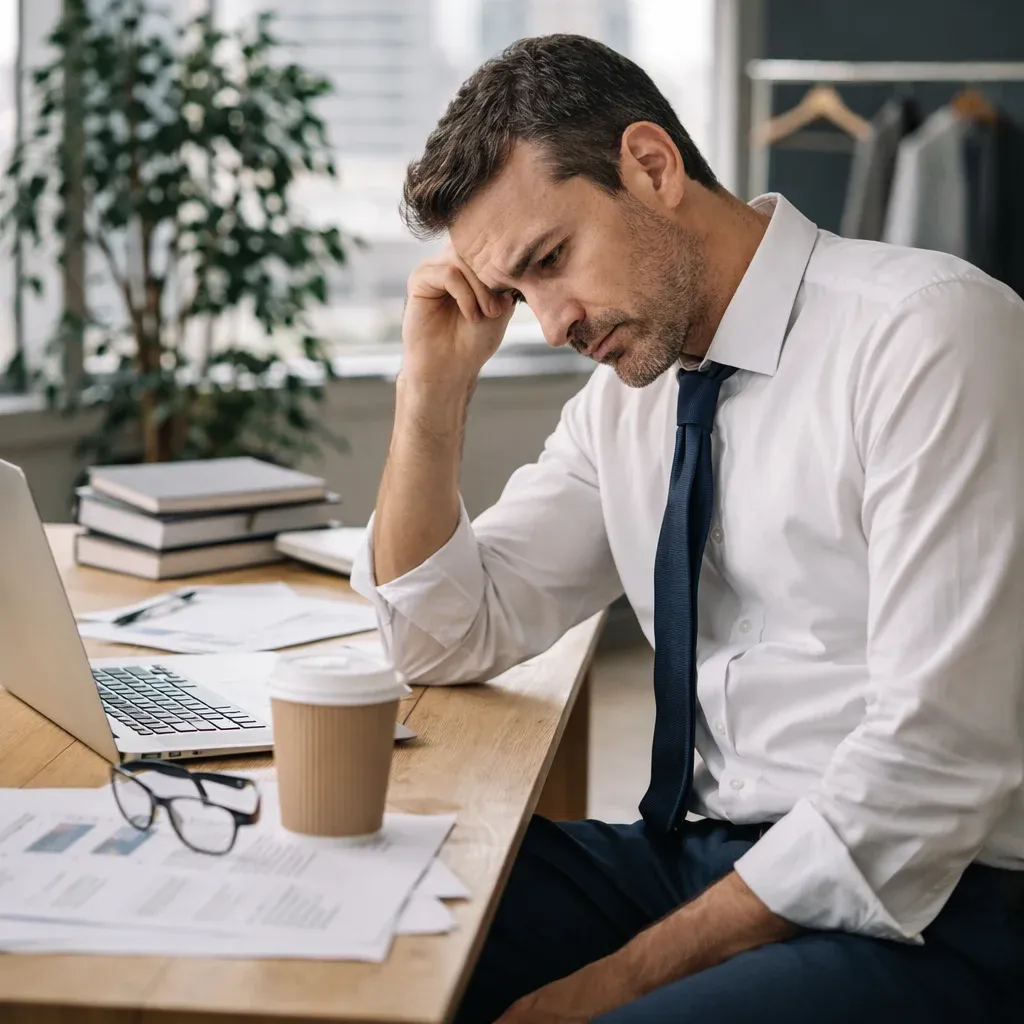

You are sitting in a quiet room. Nothing dangerous is happening, yet your chest feels tight, your breathing becomes shallow, and your heart starts racing.
Rationally, you know you’re safe.
Your body, however, seems to tell a different story.
If you’ve ever wondered why anxiety feels so physical, you’re not imagining it. Physical symptoms of anxiety are real, and they are one of the most common reasons people seek therapy.
We often think of anxiety as something that happens only in our minds. Yet anyone who has experienced nausea before an important meeting, a racing heart before making a difficult phone call, or tight shoulders after a stressful day knows that anxiety lives in the body just as much as it lives in our thoughts.
The encouraging news is that these physical reactions are not signs that your body is failing. They are signs that your body is trying to protect you.
Why Anxiety Shows Up in the Body
Your brain and body are constantly communicating.
When your brain senses danger—whether it’s a looming deadline, relationship conflict, financial uncertainty, or a difficult life transition—it prepares your body to respond.
our heart begins to beat faster.
Muscles throughout the body become tense.
Breathing often becomes quicker and shallower.
Stress hormones are released.
These reactions developed to help our ancestors survive immediate physical danger. Today, however, many of the threats we face can’t be solved by running away or fighting. Instead, our bodies stay activated while we sit in meetings, answer emails, or lie awake at night thinking about tomorrow.
One influential framework developed by Stephen Porges suggests that our nervous system is constantly evaluating whether we feel safe or threatened. Although researchers continue to study and debate aspects of this theory, it has helped many clinicians better understand why emotional stress often appears as physical symptoms.
Your body isn’t overreacting.
It’s responding to what it believes is happening.
The Mind and Body Create a Powerful Cycle
Anxiety rarely stays in just one place.
Physical sensations influence thoughts.
Thoughts influence physical sensations.
For example, a racing heart may trigger the thought:
“Something must be wrong.”
That thought creates even more anxiety.
As anxiety increases, your heart races faster.
The cycle continues.
Many people also notice that physical anxiety changes their behaviour. They begin avoiding difficult conversations, delaying important tasks, or withdrawing from situations that feel emotionally overwhelming.
If you’ve noticed yourself putting things off because they feel emotionally difficult, you may also find our article How to Stop Procrastinating helpful for understanding the connection between anxiety and avoidance.
Likewise, when anxious thoughts become repetitive, it’s easy to feel trapped in endless “what if” scenarios. Our article Overthinking Decisions explores why anxiety and overthinking often reinforce one another—and how to interrupt that cycle.
Common Physical Symptoms of Anxiety
Everyone experiences anxiety differently. However, many people notice symptoms such as:
- a racing or pounding heart,
- tightness in the chest,
- muscle tension in the shoulders, neck, or jaw,
- headaches,
- stomach discomfort or nausea,
- digestive changes,
- dizziness,
- restlessness,
- trembling,
- difficulty sleeping,
- ongoing fatigue.
Experiencing these symptoms does not necessarily mean there is a serious medical problem. However, it’s always important to discuss new or persistent physical symptoms with your healthcare provider to rule out medical conditions.
When anxiety has been present for a long time, your body may remain in a constant state of alertness.
If these experiences sound familiar, our article Stress Symptoms in the Body explains how chronic stress can affect both physical and emotional well-being.
Why Anxiety Can Become Exhausting
Living with anxiety is hard work.
Your muscles stay tense.
Your mind stays alert.
Sleep becomes less restorative.
Even enjoyable activities may feel draining because your body rarely gets the chance to fully relax.
Over weeks or months, this constant activation can contribute to emotional exhaustion and burnout.
If you’ve been feeling permanently “on,” our article Burnout Recovery for High Achievers explains why recovery involves more than simply taking time off.
Simple Ways to Calm Your Body
You can’t always control stressful situations.
However, you can gently teach your body that it is safe again.
1. Try the Physiological Sigh
Research suggests that one of the quickest ways to calm the body is through a breathing pattern known as the physiological sigh.
Take one slow breath in through your nose.
Before exhaling, take one short second inhale.
Then slowly breathe out through your mouth.
Repeat this three times.
Many people notice their breathing slows naturally after just a few repetitions.
2. Relax Your Muscles
Stress often hides in the body.
Raise your shoulders toward your ears.
Hold the tension for five seconds.
Then let your shoulders completely relax as you slowly breathe out.
You can repeat this with your jaw, hands, or any muscles that feel tight.
3. Use Sound to Slow Your Breathing
Humming softly during a long exhale can help many people feel calmer.
The gentle vibration and slower breathing encourage your body to shift toward a more relaxed state.
Even one or two minutes can make a noticeable difference.
4. Bring Yourself Back to the Present
When anxiety grows, your mind often jumps into the future.
Instead, pause and slowly look around the room.
Notice:
- five things you can see,
- four things you can touch,
- three things you can hear.
Grounding exercises like this help remind your body that you are here, in the present moment.
How Therapy Can Help
Physical symptoms of anxiety are real.
They’re not “all in your head.”
Therapy helps you understand why your body responds the way it does while teaching practical ways to calm both your mind and your nervous system.
Depending on your needs, therapy may help you:
- better understand your stress responses,
- reduce fear of physical sensations,
- improve sleep,
- strengthen emotional regulation,
- reduce perfectionism and chronic worry,
- build healthier coping strategies,
- reconnect with a sense of safety.
At BridgeMinds Psychology & Psychotherapy, our Anxiety Therapy services help people understand the connection between their mind and body while developing practical skills to reduce anxiety and restore a greater sense of calm.
Sometimes anxiety develops after a specific event. Other times it grows gradually through chronic stress, perfectionism, or years of carrying too much responsibility. Whatever your experience, Individual Therapy provides a supportive space to understand these patterns and develop healthier ways of responding to them.
Your Body Is Trying to Protect You
The racing heart.
The tight chest.
The tense shoulders.
The restless nights.
These are not signs of weakness.
They are your body’s way of saying,
“Something doesn’t feel safe right now.”
The goal of therapy isn’t to silence these signals.
It’s to understand them.
Healing doesn’t begin when your body stops speaking.
It begins when you learn to listen with curiosity, compassion, and confidence.
At BridgeMinds Psychology & Psychotherapy, we believe that lasting recovery comes from understanding both the mind and the body. When you begin working with your nervous system instead of fighting against it, calm no longer feels impossible—it becomes something you can gradually experience again.